Many sake breweries in Japan are benefiting from booming export markets. A growing handful are also taking advantage of the surge in inbound tourism with various programs and new facilities to attract visitors. Izumibashi Shuzō, located just West of Yokohama in Kanagawa prefecture, is one that is excelling at both endeavors. A new facility that they recently refurbished encouraged us to pay a visit and ask about their vision for this destination attraction.
We previously paid a lengthy visit to Izumibashi for a feature in Sake Today 26 a little more than four years ago. At the time, the brewery had just unveiled an event space in a courtyard between two buildings on the campus. There, they could host visitors in a casual setting and serve their sake. Events weren’t regular, but it seems they ran enough of them to see the promise in having facilities to attract visitors, whether they be Japanese, international residents, or even inbound tourists.
For that feature we spoke to the president, Yuichi Hashiba, about his past and his own role in shaping the family brewery in the present. Let’s revisit some of the key details in preparation for what could be a visit by you, if you ever have the opportunity.

Hashiba is the sixth generation of his family to run the company, located a short walk (20~30 minutes) from Ebina Station in a relatively quiet area checkered with rice fields and residential buildings. He returned to the family business in the late 1990s after having worked in a mainstream business, as so many children of brewers do before being called home, so to speak. Around that same time, a critical law changed that affected the brewery in significant ways.
A law in place since 1942 had stipulated that rice must be distributed through a complex, somewhat befuddling system of “Japan Agricultural Cooperatives” before reaching brewers and consumers. The Hashiba family were also certified rice growers but couldn’t directly provide rice to the very brewery they owned. Yes, ridiculously, they previously had to sell it to the co-op and buy it back.
The new law changed those dynamics. Izumibashi would thus adopt the philosophy of ikkan-zukuri, or seamless, consistent production; they would, as much as possible, grow their own rice, mill it in-house, and produce sake. Part of the inspiration for that came from a twelve-volume manga set called Natsuko no Sake that Hashiba’s wife had bought for him. It tells the true story of a Niigata brewer who revived a strain of rice, and whose passion for both rice cultivation and sake brewing resonated with Hashiba.
Hashiba then threw rice planting parties yearly with local farmers and, through those relationships, eventually grew or contract-sourced 90% of the brewery’s rice needs locally–an astounding figure in Japan. Hashiba is even the leading Kanagawa producer of that hallowed sake rice, Yamada Nishiki. This is a truly ‘local’ sake brewery.
In 2009, a further refinement to the law expanded the ability to grow and sell rice not just to farming families, but to businesses as well, meaning that the brewery itself, not just the Hashiba family, could buy and cultivate rice fields. It’s back-breaking, risky work, which is why so many breweries still use the original distribution system, but for Hashiba, it aligned with their identity.
Hashiba revolutionized the production side of his brewery as well. A toji he ‘inherited’ from his predecessor was unwilling to share his knowledge with coworkers in the brewery and was—how shall we say this?—encouraged to leave. Hashiba then abandoned the toji system and established his own team. While there is somebody in charge, the responsibilities are shared and the strict hierarchy of that traditional system does not really come into play. That combined with the ikkan-zukuri approach resulted in innovation and–most consumers would probably agree–better sake from the brewery. They started producing some lines of kimoto-style sake, and shifted to entirely junmai production as well.

The recent decision to attract more guests to the brewery through new facilities makes sense in more ways than simple economic opportunity. Hashiba himself is a positive, affable individual whose hospitality with local rice growers during the early part of his tenure is being expressed here on a broader scale. It also plays into the ikkan-zukuri ethos. Now, instead of “from rice field to bottle”, they are taking it a step further and serving their sake directly to customers, gaining in the process the opportunity to interact with them directly and create new relationships.
For this more recent visit, we met with Hashiba’s daughter, Haruna, who seems every bit as capable as her father in terms of business acumen and providing hospitality.
She explains, “We are located rather close to Tokyo so we have lots of visitors. They come from surrounding areas as well. We always wanted them to stay longer, rather than just purchase a few bottles before leaving.”
The facility they refurbished was originally a large refrigerated space for produce storage. Rather than fully modernize it into a posh tasting bar that would have been incongruous with the rest of the brewery’s architecture, they preserved much of the original atmosphere and kept the design simple. And yet, while preserving those characteristics, it still resulted in being quite elegant. We appreciate the charm of rustic, make-shift tasting rooms so common among breweries—if they even have that—but this definitely elevates the experience of drinking a delicious glass of sake.

Wood panels along the bar, a display table, and one of the walls are intended to evoke the look of stacked kojibuta, the rectangular tray-boxes that brewers sometimes use for making koji in the old ways. The high, exposed ceilings, and the way that the space opens out to the courtyard is a reminder of its warehouse origins. In the cool interior, there are four small tables for two, and two tables for up to twenty guests to gather around in a community setting. There are several tables outside and, together with the courtyard they set aside for events, plenty of further seating.
Izumibashi offers a tour that involves the tasting room. There is a large screen there that runs videos in both Japanese and English explaining rice cultivation, sake brewing, and general basics about the beverage itself. Guests can also enjoy a tasting session and a tour of the rice fields, all of which takes about an hour total (note that guests cannot enter the brewery space). Tours can be booked online, but aren’t required as a part of your visit.
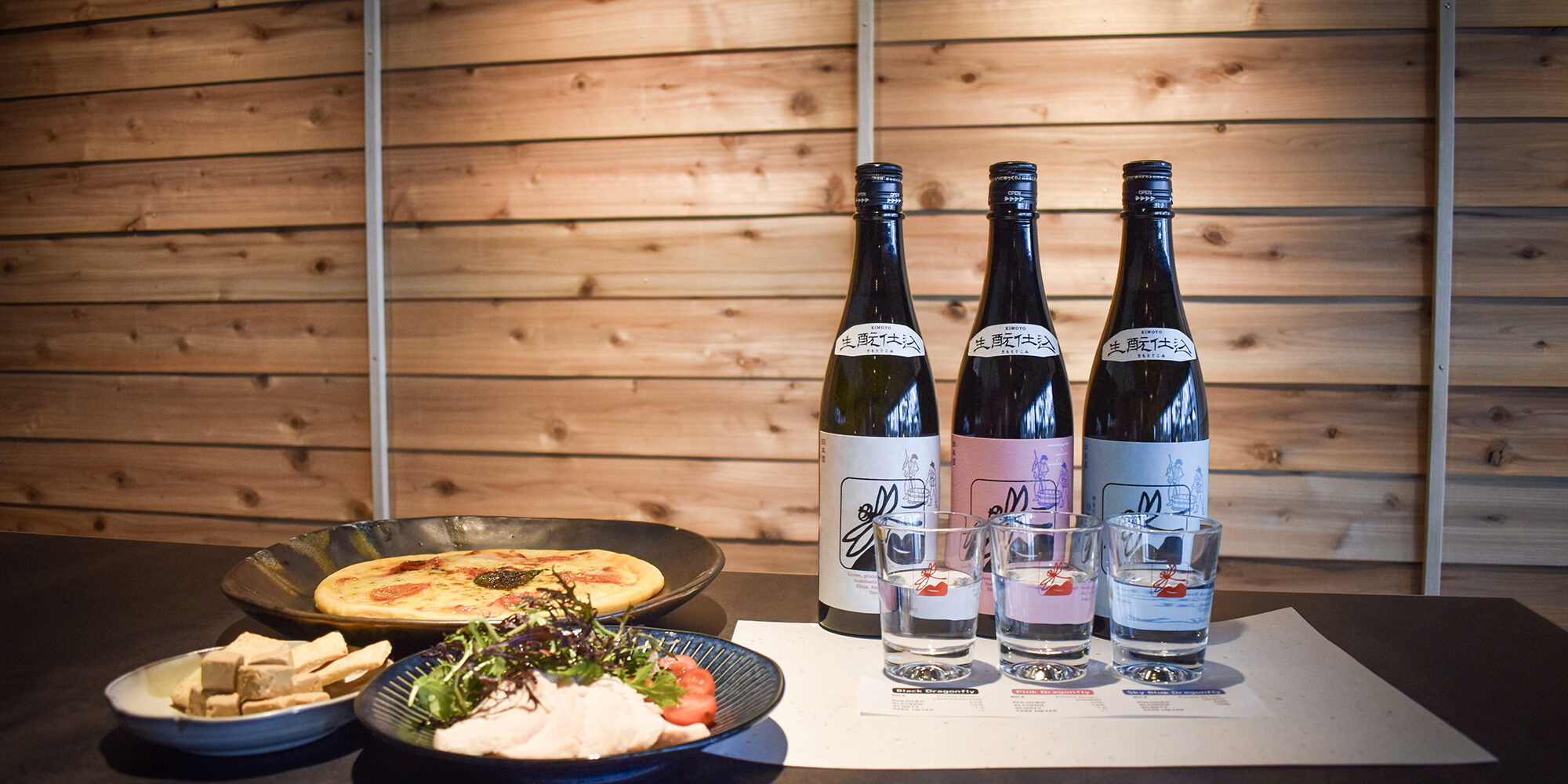
The tasting room additionally has a food menu, though at the time of our visit earlier this year, it was still in planning stages (and scheduled for launch at the end of March). You’ll probably find some simple snacks like cream cheese picked in sake lees and miso, then served on crackers; chicken marinated in koji sauce; and other items that incorporate fermented food. From May (Golden Week) onward, there will be more substantial main-menu dishes, like pizzas.
What else can visitors expect? A tantalizing gift shop where, we imagine, you’ll find their standard brands and perhaps a few special products. In talking with them, we also floated the idea of parties with DJs, and that’s certainly within the realm of possibilities. They’ve already hosted festive events in their courtyard area. Izumibashi has figured things out fairly well so far so we have faith they’ll find a way to make the experience of their brewery even richer.
Website: Izumibashi